There’s a particular kind of cold that hits Ontario homes differently. Not the “I forgot my gloves” cold—more like the “why is the house quiet?” cold.
A while back, one of our techs at SANO HEATING LTD got a call from a homeowner in the GTA: “The furnace isn’t turning on. But it was fine last night.” That sentence is practically a winter classic.
Before you panic-scroll for fixes (or start pressing random buttons on the furnace like it’s a Wi-Fi router), run through the checks below. They’re homeowner-safe, fast, and they’ll either get your heat back—or give you clean, useful clues for the service call.
Safety first: a 60-second rule that matters
Some furnace issues are “annoying.” Others are “leave the house” territory. This section is your quick filter.
Stop troubleshooting immediately if you notice any of these
- A rotten-egg / sulphur smell (possible gas leak): leave the area and call your gas utility emergency line or 911.
- Your carbon monoxide alarm sounds or anyone feels headache, dizziness, nausea, unusual fatigue, or flu-like symptoms without a fever—get to fresh air and call for help.
- Scorch marks, burning electrical smell, or repeated breaker trips (don’t keep resetting—this can get dangerous fast).
If none of those apply, you can continue with the 7 checks below.
The 7 checks to try, in the order that saves you time
These are arranged from “most common + easiest” to “more system-specific.” Do them in order—you’ll avoid chasing your tail.
1) Thermostat: mode, setpoint, batteries, and schedules
This sounds obvious… and it’s still the #1 culprit.
What to do:
- Set the thermostat to HEAT (not COOL, not OFF).
- Raise the set temperature 2–3°C above room temperature.
- If it has batteries, replace them (even if the screen is faintly on).
- If it’s a smart thermostat, check for:
- schedule overrides (it may be “holding” an eco temp)
- Wi-Fi/app conflicts
- a quick reboot (remove from base, wait 10 seconds, re-seat)
Ontario tip: On the first cold snap, some thermostats behave like a confused houseguest—settings that worked in shoulder season suddenly don’t.
If it still won’t call for heat, move on.
2) Power basics: furnace switch, breaker, and the “oops” disconnect
A gas furnace still needs electricity to run controls, ignition, and the blower.
What to do:
- Look for a service switch near the furnace (it often looks like a normal light switch). Make sure it’s ON.
- Check your electrical panel for a breaker labeled Furnace / HVAC.
- If it’s tripped, flip fully OFF, then ON.
If the breaker trips again:
- Stop resetting it. That’s not “bad luck”—it’s a warning sign. At that point, you’re in professional diagnostic territory.
If you’re comparing options for a licensed team, start with an ontario hvac contractor that clearly serves your area and can respond quickly.
3) Furnace door panel: the sneaky safety interlock
Modern furnaces often won’t run if the front panel isn’t seated properly. It’s a built-in safety switch.
What to do:
- Turn the thermostat OFF.
- Make sure the blower door/front panel is fully aligned and snug.
- Turn thermostat back to HEAT and wait 2–5 minutes.
Real-life moment: This one gets homeowners after filter changes. The panel looks “closed,” but it’s not clicked into place.
4) Filter and airflow: the simplest “no heat” fix that’s also preventative
A clogged filter can choke airflow, cause overheating, and trigger a safety shutdown. Many furnaces will “try,” fail, then lock out for a while.
What to do:
- Turn off the furnace.
- Pull the filter and check it against a light source.
- If you can’t see light through it, replace it.
- Make sure supply vents aren’t blocked by rugs/furniture.
- Confirm at least one return air vent is open and unobstructed.
If you want a deeper Ontario-specific filter rhythm, SANO has a practical guide on timing and winter load (worth skimming when things are warm again).
5) Outside intake/exhaust pipes: snow, ice, and wind are frequent Ontario troublemakers
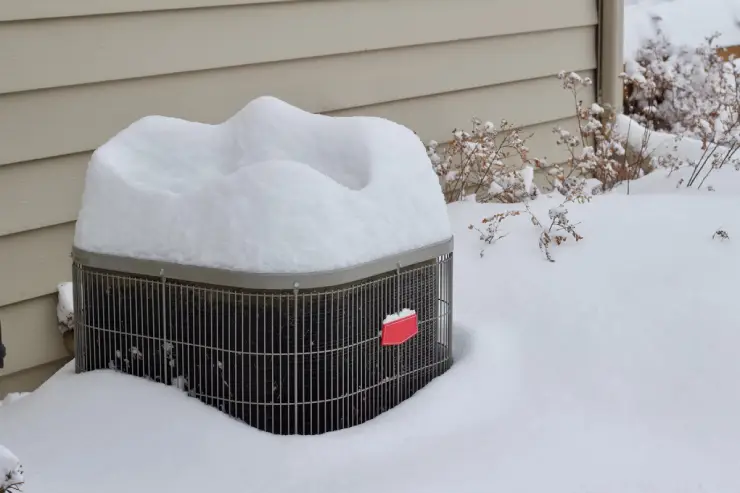
High-efficiency furnaces often use PVC pipes for intake and exhaust. In Ontario winters, those pipes can get blocked by snow drifts, ice buildup, or debris.
What to do:
- Locate the furnace venting outside.
- Clear snow and visible blockage around pipe openings.
- Don’t chip aggressively (cracked PVC is a bad day). Use warm water carefully if you’re dealing with ice.
What you’re preventing:
- Pressure switch errors
- combustion/venting safety lockouts
- short cycling that never becomes “real heat”
This step alone saves a surprising number of mid-winter service calls.
6) Condensate drain and pump: the “quiet shutdown” many blogs forget
Here’s a more unique one—and it matters a lot in Ontario.
Condensing furnaces create water (condensate). If the drain is blocked, frozen, or the condensate pump fails, some systems shut down to prevent leakage or unsafe operation.
What to look for:
- Water around the furnace base
- A full condensate pump reservoir that isn’t pumping out
- A frozen drain line (common in cold basements, crawlspaces, or near exterior walls)
What to do (homeowner-safe):
- Check the pump power (if you have one).
- Ensure the drain hose isn’t kinked.
- If you suspect freezing, don’t force it—call a pro. Improvised fixes can cause leaks into cabinets, drywall, or electrical components.
This is exactly the kind of issue that turns into a “why is my furnace dead again?” situation if it’s not corrected properly.
7) Ignition and gas supply: pilot light, igniter, flame sensor, and “lockout”
If you’ve reached step 7, you’ve eliminated the easy wins. Now we’re in the zone where the furnace may be protecting itself.
What you can safely check:
- Gas valve position (handle parallel to the pipe usually indicates ON).
- Listen at startup:
- Do you hear a click and then nothing?
- Do you hear the inducer motor but no ignition?
Important safety note:
- If you smell gas, stop and follow your gas utility’s emergency steps.
What usually needs a pro here:
- hot surface igniter failure
- dirty flame sensor causing ignition then immediate shutdown
- control board lockout (often after multiple failed ignition attempts)
- gas pressure, combustion setup, venting confirmation
At this stage, booking hvac repair ontario is the practical move—especially if the house temperature is dropping fast.
Also Read: Signs Your Furnace Needs Repair Before Ontario’s Winter Sets In
The blinking light isn’t random: how to use error codes without guessing
Most furnaces have a small viewing window with an LED that blinks a pattern. That pattern often maps to a fault code on the inside panel.
A quick way to make error codes useful for the service call
- Snap a photo of:
- the blinking pattern (or a short video)
- the model/serial label
- Write down what happened right before failure:
- power flicker?
- filter change?
- big snowfall?
- thermostat changes?
Even if you don’t decode the code yourself, this cuts diagnosis time—and gets you to heat faster.
If the furnace turns on… then shuts off quickly
That “starts, tries, quits” behavior points to a smaller set of likely causes.
Common patterns we see in Ontario homes
- Airflow restriction (filter, blocked returns, closed vents)
- Venting/intake blockage (snow/ice)
- Flame sensing issues (ignites, then shuts down)
- Condensate trouble (drain/pump/freeze)
If it does this more than once, avoid repeated resets. You’ll often make the lockout longer, not shorter.
Also Read: Is it bad to switch between heat and AC?
A simple prevention routine for winter (10 minutes a month)
This isn’t glamorous, but it’s effective.
The “keep it boring” checklist
- Check filter condition (replace before it’s a lint blanket)
- Keep intake/exhaust clear after heavy snow
- Keep a little clearance around the furnace
- Don’t block returns with storage bins (it happens a lot)
If you want a broader maintenance cadence (and what should never be DIY), this SANO piece lays out where homeowners should stop and technicians should take over.
FAQ
Why is my furnace not turning on even though the thermostat is on?
Most often: thermostat batteries/settings, a tripped breaker, a loose furnace panel, or a clogged filter causing a safety shutdown.
Is it safe to keep resetting the furnace breaker?
No. If it trips again, stop resetting—an electrical fault can be dangerous and needs a licensed technician.
Can snow really stop a furnace from running?
Yes—high-efficiency furnaces can lock out if intake/exhaust pipes are blocked by snow or ice.
What should I do if I smell gas near the furnace?
Leave immediately and call your gas utility’s emergency number or 911.
How do I know I’m hiring the right contractor in Ontario?
Look for proper registration/licensing for fuels work in Ontario (TSSA-related requirements) and a clear service footprint in your area.
Ready to get heat back today?
If you ran through the 7 checks and still have no heat, don’t sit in a cold house hoping it “sorts itself out.”
Book emergency hvac repair near me with SANO HEATING LTD for fast diagnostics and safe, Ontario-ready repairs. You can also call (647) 967-4911 to get help moving right away.
And when summer rolls around, if you’re planning upgrades, keep air conditioning installation Ontario on your shortlist so your home stays comfortable year-round.