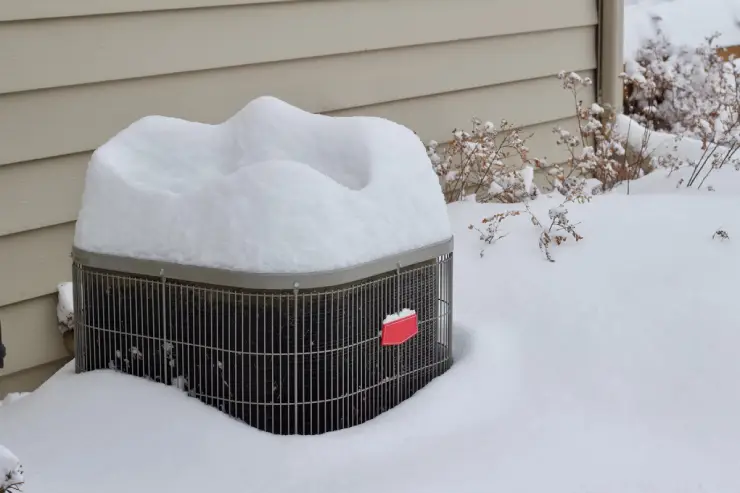
Ontario winters have a personality of their own. One week it’s heavy snow, the next it’s freezing rain, followed by a sudden thaw and an overnight deep freeze. While most homeowners focus on staying warm indoors, outdoor HVAC units quietly absorb the punishment.
Snow and ice don’t just sit there. They melt, refreeze, expand, block airflow, strain motors, and slowly chip away at system efficiency. This guide isn’t written from a manual—it’s shaped by how HVAC systems actually behave in Ontario conditions.
If you want your system to survive winter without emergency calls or surprise breakdowns, this is where you start.
Why Snow and Ice Are More Dangerous Than Extreme Cold Alone
Cold temperatures are expected. HVAC systems in Canada are built for them. What they’re not built for is constant moisture combined with freeze–thaw cycles.
Snow melts into water. Water seeps into small spaces. Overnight, it freezes and expands. Repeat this cycle for weeks and you get:
- Bent condenser fins
- Frozen fan blades
- Cracked insulation on refrigerant lines
- Moisture intrusion in electrical components
- Reduced airflow that forces the system to overwork
This is why many winter breakdowns don’t happen during the coldest nights, but right after a mild daytime thaw followed by a hard freeze.
How Ontario’s Winter Climate Changes HVAC Protection Rules
Ontario doesn’t behave like the Prairies or the West Coast. The biggest challenge here isn’t snow depth—it’s snow density and moisture.
Wet, heavy snow from Lake Ontario storms behaves very differently than dry powder. It compacts, freezes solid, and becomes difficult to remove without causing damage.
Most generic HVAC winter advice online ignores this nuance. In Ontario, protection strategies must assume:
- Frequent freeze–thaw cycles
- Ice storms and freezing rain
- Wind-driven snow accumulation
- Roof runoff refreezing near units
Ignoring these realities leads directly to avoidable failures.
Snow Clearance Around Outdoor HVAC Units: What Actually Works
Clearing snow sounds simple. In practice, it’s one of the most common sources of accidental damage.
Outdoor units require open airflow year-round—even in winter. Snow that restricts airflow forces the system to work harder, increasing wear on motors and compressors.
You should always maintain:
- 18–24 inches of clearance on all sides
- At least 5 feet of open space above the unit
Plastic shovels or soft brooms are safest. Metal tools easily bend aluminum fins, even with light contact.
Never pile shoveled snow against the unit “temporarily.” Once it freezes, it becomes a solid airflow wall.
Also Read: Gas vs. Electric Furnace — Which Is Best for Your Home?
Covering Outdoor HVAC Units: When It Helps and When It Hurts
Covering HVAC units is one of the most misunderstood winter practices.
A fully wrapped unit traps moisture, encourages corrosion, and creates ideal shelter for rodents. In Ontario, that’s a recipe for springtime repair bills.
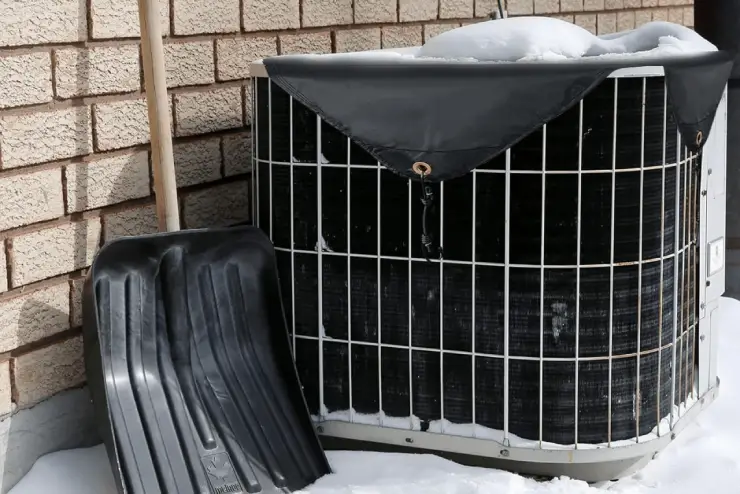
Partial covering can help only in specific cases:
- To protect from falling icicles or roof ice
- To reduce direct snow accumulation from above
If a cover is used, it must be:
- Breathable
- Open on the sides
- Secure without compressing coils
If airflow is restricted, the cover causes more harm than snow ever would.
Ice Buildup: When Frost Becomes a Problem
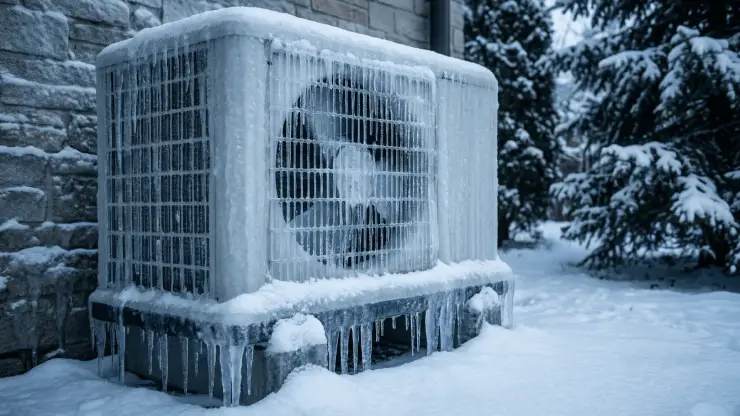
A light layer of frost on a heat pump can be normal. Thick ice is not.
Ice buildup reduces airflow, increases system strain, and can physically damage moving parts. Left alone, it often leads to system lockouts or motor failure.
Signs ice has crossed the danger line
- Fan blades struggling to spin
- Loud humming or grinding noises
- System short-cycling
- Reduced indoor heating output
At this stage, forcing the system to run usually turns a minor issue into a major hvac repair Ontario situation.
Heat Pumps in Ontario Winters: Extra Care Required
Heat pumps are becoming increasingly common across Ontario, and for good reason. But they operate differently than traditional air conditioners.
They rely on defrost cycles to manage ice. When snow blocks coils or drainage paths, those cycles can’t do their job.
Problems arise when:
- Snow packs tightly around the base
- Ice locks the fan assembly
- Meltwater refreezes beneath the unit
Raising the unit on a proper stand and keeping the base clear is one of the smartest long-term protection steps homeowners can take.
Drainage Issues: The Hidden Winter Threat
Snow melts even in sub-zero climates. That water needs somewhere to go.
When drainage is ignored, meltwater refreezes beneath or around the unit, forming thick ice pads. These can:
- Tilt the unit off-level
- Freeze fan motors
- Stress refrigerant connections
Ensure:
- The unit sits on a raised, level pad
- Downspouts don’t discharge nearby
- Ice buildup beneath the unit is removed safely
Many winter failures blamed on “cold weather” are actually drainage failures in disguise—often requiring an experienced ontario hvac contractor to resolve properly.
Wind, Drifting Snow, and Airflow Blockage
Wind changes everything.
Strong winter winds common in open Ontario neighborhoods can drift snow directly into condenser coils—even if surrounding areas look clear.
Wind-packed snow is denser and harder to remove. It also melts slower, extending exposure time.
Regular visual checks after storms are critical, especially for units positioned on:
- Corner lots
- Elevated decks
- Open backyards
Ignoring wind-driven snow buildup quietly erodes system performance.
Homeowner Mistakes That Lead to Winter HVAC Damage
Every winter, technicians see the same well-intentioned mistakes:
- Wrapping units tightly in tarps
- Stuffing cardboard inside grills
- Using space heaters near outdoor units
- Chipping ice aggressively with metal tools
These actions often void warranties or cause electrical and mechanical damage.
Winter HVAC care isn’t about improvisation—it’s about restraint and informed action.
Also Read: How Long Do AC Units Last in Ontario?
Preventive Maintenance: The Smartest Winter Protection
The most effective winter protection doesn’t start in January. It starts in fall.
A proper pre-winter inspection can identify:
- Weak fan motors
- Failing electrical seals
- Drainage vulnerabilities
- Early corrosion
Addressing these early prevents mid-winter emergencies when parts and technicians are hardest to secure.
This proactive approach is exactly how companies like SANO HEATING LTD help homeowners avoid sudden system failures during Ontario’s harshest weeks.
Emergency Situations: When to Shut the System Down
If your outdoor HVAC unit:
- Stops heating entirely
- Trips breakers repeatedly
- Produces grinding or screeching noises
Turn it off.
Running a compromised system nearly always increases damage and repair costs. This is when many homeowners search for emergency hvac repair near me, often during peak demand windows.
Fast action can mean the difference between a minor fix and a major replacement.
Winter Protection and Long-Term Energy Efficiency
Snow and ice damage doesn’t always cause immediate breakdowns. Sometimes it slowly:
- Raises energy bills
- Reduces airflow efficiency
- Shortens compressor lifespan
Protecting your outdoor HVAC unit preserves efficiency across the system’s entire life—not just one season.
For homeowners planning future upgrades or air conditioning installation Ontario, winter care directly impacts long-term return on investment.
Real Ontario Scenarios HVAC Technicians See Every Winter
In Mississauga and the GTA, a common call comes after freezing rain followed by overnight temperature drops. Units appear “fine” visually, but internal components are frozen solid.
Another frequent scenario: roof meltwater refreezing directly under heat pumps, lifting them unevenly and locking fan assemblies.
These aren’t rare edge cases—they’re seasonal patterns. Knowing them is what separates generic advice from real-world guidance.
FAQ
Should outdoor AC units be turned off in winter?
Yes. Cooling systems should be powered down. Heat pumps must remain operational.
Is snow touching the unit a problem?
Light contact is fine. Burial or compacted snow is not.
Can ice permanently damage HVAC components?
Yes—especially motors, fins, and electrical connections.
Do heat pumps need snow clearance?
Yes. Even more than traditional AC units.
When should I call a professional?
If ice persists, airflow drops, or unusual noises appear.
Final Thoughts: Smart Winter Protection Pays Off
Ontario winters are unpredictable, but HVAC failures don’t have to be.
Snow and ice are mechanical stressors, not cosmetic nuisances. Protecting your outdoor HVAC unit means fewer emergencies, lower energy costs, and longer system life.
Ready to protect your HVAC system the right way?
If you need expert winter preparation, fast repairs, or long-term system care, work with a local team that understands Ontario conditions.
Book your winter HVAC service with SANO HEATING LTD today and stay protected before the next storm hits.